
Ορισμός της Αγάπης - Ρεμπέτικο & Λαϊκό
Rembetiko - contradiction as lived reality / Laïko - contradiction deeply felt and voiced from within, living it openly, with emotional clarity
Εισαγωγή
Το ρεμπέτικο στυλ φέρνει το τραγούδι σε έναν πιο γειωμένο και ανθρώπινο χώρο. Η ελληνική γλώσσα εδώ δίνει την αίσθηση άμεσης και εκφραστικής, διαμορφωμένης από τον φυσικό ρυθμό της μουσικής. Η ενορχήστρωση είναι απλή και λιτή, επιτρέποντας στο συναίσθημα να εκφραστεί χωρίς αποστάσεις. Αυτή η εκδοχή δίνει την αίσθηση βιωματικής και πραγματικής, σαν οι ιδέες να ανήκουν στην καθημερινή εμπειρία.
English Translation
The Rembetiko style brings the song into a more grounded and human space. The Greek language feels direct and expressive here, shaped by the natural rhythm of the music. The arrangement is simple and unadorned, allowing the emotion to come through without distance. This version feels lived-in and real, as if the ideas belong to everyday experience.
Ελληνικό ποίημα / English Poem
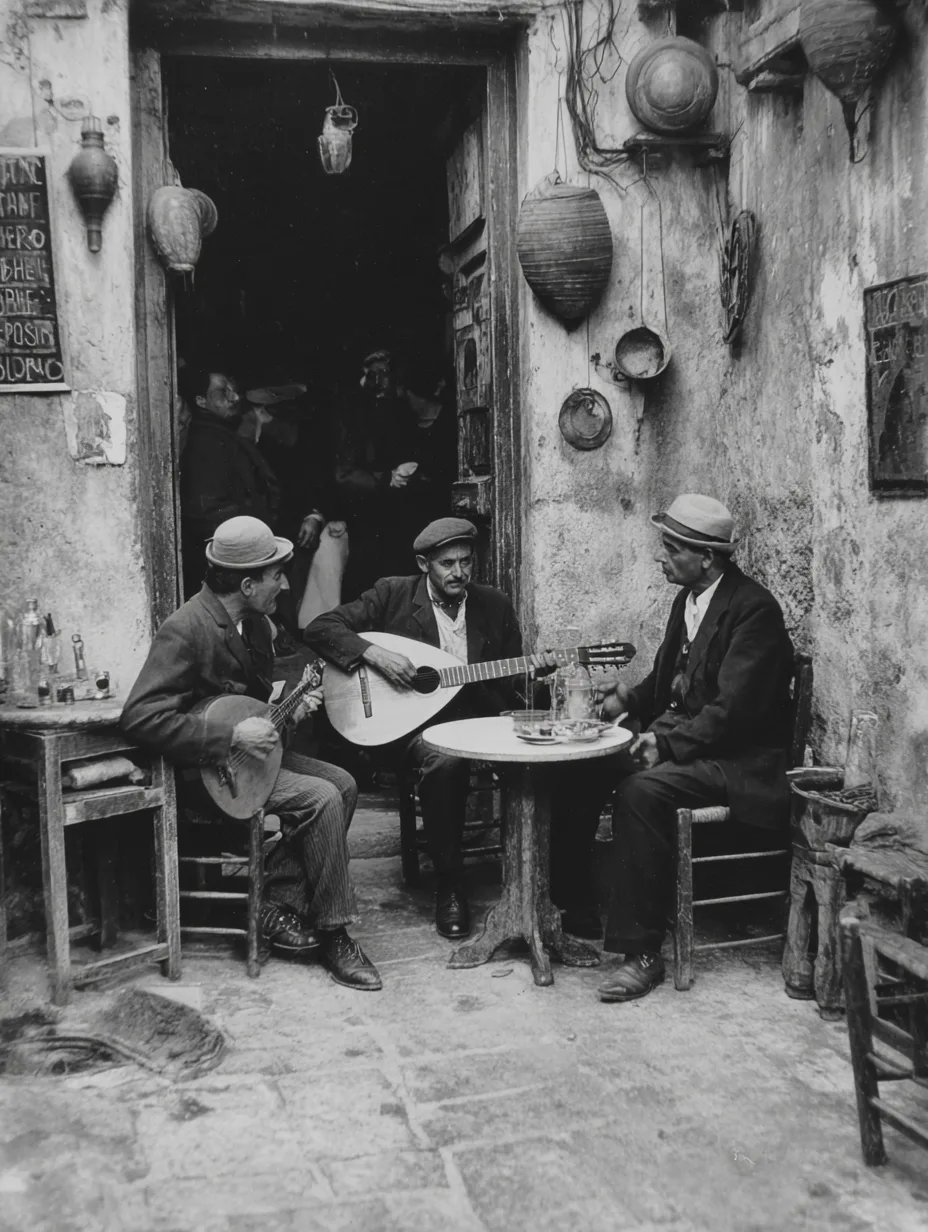
The Greek lyrics sit left and the English translation sits right of the centred cover, with further explanations about the song continuing full width below.
Στίχοι τραγουδιού
Θέλω γυναίκα μου να σε πάρω,
μα ξέρω πως θα σε προδώσω.
Όλη μου τη ζωή θα σ’ αγαπάω,
κι απ’ τον καημό θα σε λιώσω.
Μωρό μου, ελεύθερη είσαι εσύ,
μα θέλω να ’σαι όλη δικιά μου,
να μη στηρίζεσαι ποτέ σε με,
κι όμως να ζεις μες στην καρδιά μου.
Τον δρόμο σου τον σέβομαι,
μα θέλω να σε πλάσω λίγο,
ό,τι κι αν λες πως θες να γίνεις εσύ,
εγώ θα αλλάζω ό,τι σου λέω κι ανοίγω.
Θέλω να στέκεις δυνατή,
μα να σκύβεις σαν θα ’ρθει η ώρα,
να με μαλώνεις όταν φταίω εγώ,
και να σωπαίνεις δίχως φόρα.
Lyrics
I want to take you as my wife,
but I know I will betray you.
I will love you all my life,
and I will melt you with grief.
My baby, you are free,
but I want you to be all mine,
never rely on me,
yet live in my heart.
I respect your path,
but I want to mold you a little,
no matter what you say you want to be,
I will change what I tell you and open up.
I want you to stand strong,
but to bend when the time comes,
to scold me when it is my fault,
and to be silent without a voice.
Greek Rembetiko Version (1)
Listen to the Rembetiko version on Spotify →Greek Laïkó Version (1)
Listen to the Laïkó version (1) on Spotify →Greek Laïkó Version (2)
Listen to the Laïkó version (2) on Spotify →Rembetiko
Rembetiko (or Rebetiko) is a genre of Greek urban folk music that emerged in the late 19th century and flourished between the 1920s and 1950s, often called the "Greek blues". It originated among the poor, marginalized, and refugee populations in port cities, featuring themes of love, crime, poverty, and sorrow.
Interaction Between Music & Lyrics
The lyrics have changed from the original Éntekhno version. It is now leaning into a Rembetiko-style, which is perfect for this kind of bitter, self-contradictory love. The street-poetic Greek, strong end rhymes, simple phrasing, and that slightly fatalistic, masculine voice is what reminiscent of the style in old songs.
Rembetiko allows the contradictions in the lyrics to exist as part of life, rather than as something to resolve or elevate. The steady rhythm and modal harmony give the paradox a sense of familiarity, as if it has been known and felt many times before. The Greek language reinforces this, making each line feel direct and unembellished.
What emerges is something simple and enduring, where paradox, whilst maybe controverial as an expression of traditional male culture, becomes part of everyday life.
Technical Snapshot (Concise)
- Tempo & groove: BPM: 152. Moderate tempo with a steady, often slightly syncopated groove, grounded and rhythmic with a subtle sway.
- Harmony:D major. Modal and minor-key centred, with simple, repetitive progressions supporting melodic and lyrical emphasis.
- Instrumentation & texture: Traditional ensemble (bouzouki, guitar, bass), creating a raw, intimate, and earthy sonic texture.
- Dynamics & production: Relatively restrained and consistent, focusing on expression through phrasing and tone rather than large dynamic shifts.
Laïkó
Laïkó (meaning "song of the people" is a popular Greek music genre that emerged in the 1950s as a mainstream, urban folk style, heavily influenced by traditional sounds, the buzouki, and emotional, relatable lyrics. It evolved from earlier Rembetiko music, becoming a blend of traditional folk and modern pop/rock, often played in nightclubs and restaurants.
Interaction Between Music & Lyrics
While the lyrics are the same, I chose to set them also to Laïkó music to see how the "emotions" change when not only set to a "livelier" music style, but also when sung by women.
It captures the emotional tension between vulnerability and dominance, highlighting the internal struggle of wanting to be both a protector and a source of conflict within a romantic relationship.
Technical Snapshot (Concise)
- Tempo & groove: BPM: 103 (Version 2). Moderate tempo with a steady, expressive groove, often slightly syncopated, supporting lyrical phrasing and emotional delivery.
- Harmony:Eb minor (Version 2) key centred with modal influences, featuring simple but emotive progressions that emphasise melodic expression.
- Instrumentation & texture: Traditional Laïko ensemble (bouzouki, guitar, keys, bass), creating a warm, melodic, and culturally grounded texture.
- Dynamics & production: Moderately dynamic with expressive phrasing, focusing on vocal emotion and melodic ornamentation rather than dramatic contrast.